+91-9825708221

| No Item Found... |
Pressure
Leading Manufacturers, Exporters, Wholesaler of Analog Magnehelic Gauge, Conductive Level Transmitter Switch, Differential Pressure Transducers, Digital Pressure Gauge, Digital Pressure Transmitter, Displacer Level Switch, Flow Switchs, Magnetic Level Transmitter/switch, Pressure Transmitter and Vibrating Fork Level Switch from Ahmedabad.

| Business Type | Manufacturer, Exporter, Supplier |
| Material | Die-cast Aluminum With Acrylic Cover |
| Type | Analog Pressure Gauge |
| Accuracy | ±2% Of Full Scale |
| Connection | 1/8” NPT / BSP |
| Range | 0–50 Pa Up To 0–1500 MmWC / Mbar |
| Mounting | Surface / Flush / Panel |
| Applications | HVAC,Cleanrooms,Filter Monitoring,Labs |
Visual. Rugged. Maintenance-Free. Designed for monitoring low differential pressure across filters, clean rooms, or air handling units. Easy-to-read analog dial with no power required.
| Business Type | Manufacturer, Exporter, Supplier |
| Design | Customised |
| Packaging Type | Box |
| Media Type | Liquid |
| Country of Origin | India |
| Material | Metal |
| Surface Finishing | Polished |
| Shape | Rounded |
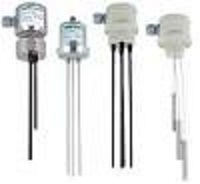
Conductivity level switchesTransmitters are based on the principle of measuring level through the electrical properties of the process material. As the name suggests, the conductivity based level switches and sensors sense the level of water or other conductive liquids that have free ions. These switchesTransmitters are successfully used in processing plants for conductive liquids , and serve the following applications: To avoid overflow For maintaining a constant level to avoid material wastage For switching off pumps when running dry and indicating an empty tank to avoid wear and tear and production stoppage

| Business Type | Manufacturer, Exporter, Supplier |
| Condition | New |
| Power | Electric |
| Application | Static Application Use |
| Feature | Accurate Results, Durable, Excellent Performance, Fine Finished, High Quality |
| Number Of Flower | Differential Pressure Transducers |
| Country of Origin | India |
| Material | Mild Steel |
| Product Code | DPT |
| Port | Any |
| Payment Terms | T/T |
| Packaging Details | Box |
Differential pressure transducers, while similar to standard pressure transmitters, focus on measuring the difference in pressure between two points in a fluid or gas system. They don't provide absolute pressure readings but rather the variation between two pressures. Here's a breakdown of their typical specifications:
General Specifications
· Differential Pressure Range: This specifies the range of pressure difference the transducer can measure (e.g., ±100 Pa, -10 to +10 bar).
· Accuracy: Expressed as a percentage of full scale (%FS) similar to standard transmitters. Typical accuracy for good quality models is ±0.5%FS to ±2%FS.
· Output Signal: The most common output signal is a 4-20mA current loop, but 0-5V or 0-10V voltage outputs can also be found.
· Supply Voltage: The voltage required to power the transducer (typically 24VDC).
·
Performance Specifications
· Temperature Limits: The operating temperature range the transducer can withstand.
· Static Pressure Rating: The maximum pressure each individual input port can handle without damage (important because differential transducers have two pressure inputs). This can be higher than the differential pressure range.
· Proof Pressure: The maximum overall pressure the transducer can withstand without permanent damage (typically 1.5 to 2 times the upper limit of the differential pressure range).
· Burst Pressure: The pressure that will cause catastrophic failure (typically 4 times the upper limit of the differential pressure range).
· Response Time: The time it takes for the output to respond to a change in pressure difference (usually in milliseconds).
Environmental Specifications
· Ingress Protection (IP rating): Similar to other transmitters, this rating indicates the level of protection against dust and water ingress (e.g., IP65 for dust tight and water jets).
· Material of Construction: The materials used in wetted parts (those coming into contact with the process fluid) are crucial. Common materials include stainless steel, Hastelloy C, and Monel.
Additional Features
· Media Compatibility: The type of fluids or gases the transducer is compatible with, considering factors like corrosiveness.
· Communication Protocol (Optional): Some advanced models offer communication protocols like HART for remote configuration and diagnostics.
· Display (Optional): Some transducers may have a built-in display for local pressure difference reading.
· Calibration: Calibration is necessary to ensure accuracy. Some models offer features like zero and span adjustments for easier calibration.
Factors to Consider When Selecting a Differential Pressure Transducer
· Process Connections: The type of fitting used for connecting the transducer to the two pressure points (e.g., NPT, flange).
· Electrical Connections: The type of electrical connector for power and output signal.
· Fluid Compatibility: Ensure the materials and media compatibility specifications match the fluids in your application.
By understanding these differential pressure transducer specifications and additional factors, you can select a suitable model for your specific application that requires measuring pressure differences in liquids or gases.
| Business Type | Manufacturer, Exporter, Supplier |
| Display Type | Digital |
| Material | Metal |
| Number Of Flower | Digital Pressure Gauge |
| Brand | SA |
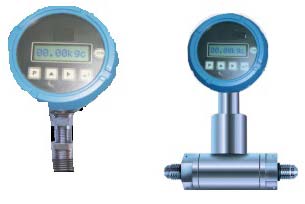
Digital pressure gauges, compared to their analog counterparts with dials and needles, offer a digital display for pressure readings and often come with additional features. Here's a breakdown of their typical specifications.
General Specifications
· Pressure Range: The range of pressure the gauge can measure, similar to other pressure transmitters (e.g., from fractions of psi to thousands of psi).
· Accuracy: Expressed as a percentage of full scale (%FS). Typical accuracy for good quality gauges is ±0.1%FS to ±0.5%FS.
· Display: Digital gauges provide a clear and easy-to-read digital readout of the pressure measurement.
· Pressure Units: They can often display pressure readings in various engineering units like psi, kPa, bar, mmHg, and more.
Performance Specifications
· Temperature Limits: The operating temperature range the gauge can withstand.
· Proof Pressure: The maximum pressure it can handle without permanent damage (typically 1.5 to 2 times the upper pressure range limit).
· Burst Pressure: The pressure that will cause catastrophic failure (typically 4 times the upper pressure range limit).
· Response Time: The time it takes for the display to update in response to a pressure change (usually faster than analog gauges, in milliseconds).
Additional Features
· Data Logging (Optional): Some gauges can store pressure data internally or on an external memory card for later analysis.
· Min/Max Recording: Some models can track and display the minimum and maximum pressure readings recorded during use.
· Calibration: Calibration is necessary to ensure accuracy. Some gauges offer features like user-friendly calibration routines.
· Battery Life: Battery-powered gauges typically specify their operating life on a single battery charge.
· Auto-Shutoff: A power-saving feature that automatically turns off the gauge after a period of inactivity.
· Backlight: A feature for improved visibility in low-light conditions.
· Enclosure Rating (IP rating): Indicates the level of protection against dust and water ingress (e.g., IP54 for dust resistance and splash water protection).
Factors to Consider When Selecting a Digital Pressure Gauge
· Pressure Range: Choose a gauge with a range that comfortably covers the pressure you intend to measure.
· Accuracy: Select a gauge with accuracy that meets your application's requirements.
· Features: Consider additional features like data logging, min/max recording, or backlight based on your needs.
· Environmental Conditions: Choose an enclosure rating suitable for the dust and moisture levels in your application environment.
· Portability: If portability is important, consider the size and weight of the gauge.
By understanding these specifications and factors, you can select a digital pressure gauge that offers the right combination of features, accuracy, and usability for your specific pressure measurement needs.
| Business Type | Manufacturer, Exporter, Supplier |
| Country of Origin | India |
| Material | Mild Steel |
| Driven Type | Battery |
| Application | Industrial Use |
| Feature | Auto Controller, Durable, High Performance |
| Number Of Flower | Digital Pressure Transmitter |
| Payment Terms | T/T |
| Packaging Details | Box |
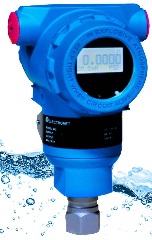
Digital pressure transmitters differ from their traditional counterparts in their output signal. Instead of a standard 4-20mA current loop, they provide a digital signal like I2C, SPI, or HART protocol. This allows for more complex data transmission and integration with digital control systems. Here's a breakdown of typical digital pressure transmitter specifications, incorporating elements from both analog and digital realms:
General Specifications
· Pressure Range: Similar to analog transmitters, this specifies the measurable pressure range (e.g., from fractions of psi to thousands of psi).
· Accuracy: Expressed as a percentage of full scale (%FS). Typical accuracy remains around ±0.1%FS for good quality models.
· Output Signal: This is the key differentiator. Digital transmitters use protocols like I2C, SPI, or HART to transmit digital data representing pressure readings.
Performance Specifications
· Temperature Limits: The operating temperature range the transmitter can withstand.
· Proof Pressure: The maximum pressure it can handle without permanent damage (typically 1.5 to 2 times the upper pressure range limit).
· Burst Pressure: The pressure that will cause catastrophic failure (typically 4 times the upper pressure range limit).
· Response Time: The time it takes for the digital output to respond to a pressure change (usually in milliseconds).
Digital Specifications
· Communication Protocol: The specific digital protocol used for communication (e.g., I2C, SPI, HART). This determines how the transmitter interacts with digital systems.
· Resolution: The smallest pressure change that the transmitter can detect and represent digitally. Higher resolution translates to more precise measurements.
· Data Format: The format of the digital data transmitted by the sensor, which specifies how the pressure value is encoded.
Environmental Specifications
· Ingress Protection (IP rating): Similar to analog models, this rating indicates the level of protection against dust and water ingress (e.g., IP67 for dust tight and submersion up to 1 meter).
· Material of Construction: Materials used in parts coming into contact with the process fluid (e.g., stainless steel, Hastelloy C, Monel).
Additional Features
· Display: Some models may have a built-in display for local pressure reading.
· Calibration: Calibration is necessary to ensure accuracy. Some models offer features like zero and span adjustments for easier calibration.
Factors to Consider When Selecting a Digital Pressure Transmitter
· Process Connection: The type of fitting used for connection (e.g., NPT, flange, sanitary tri-clamp).
· Electrical Connections: The type of electrical connector for power and data transmission.
· Software Compatibility: Ensure the transmitter's protocol is compatible with your data acquisition system or controller software.
By understanding these specifications and additional factors, you can choose a digital pressure transmitter that aligns with your application's requirements for accurate digital pressure measurement and seamless integration with your digital control system.
| Business Type | Manufacturer, Exporter, Supplier |
| Country of Origin | India |
| Driven Type | Battery |
| Condition | New |
| Automation Grade | Automatic |
| Certification | CE Certified |
| Number Of Flower | Displacer Level Switch |
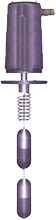
These Switches are the most versatile for level control and have advantages over float type switches in the control of agitated liquids paints-varnishes & heavy oil and foaming liquids. The Displacer weight is heavier than the liquid which is suspended by a spring. When the liquid rises the displacer looses the weight, this causes the spring to retract slightly to a new equilibrium position. This retracts of the spring interchanges the position of the Magnet provided at the top and actuates the switch. Upto three independent switch junctions are available in the single unit, with broad choice of operating sequences. These are flange mounted and are available with a choice of material of construction.
| Business Type | Manufacturer, Exporter, Supplier |
| Country of Origin | India |
| Material | Metal |
| Surface Finishing | Polished |
| Shape | Square |
| Design | Standard |
| Packaging Type | Box |
| Specialities | High Tensile, High Quality |
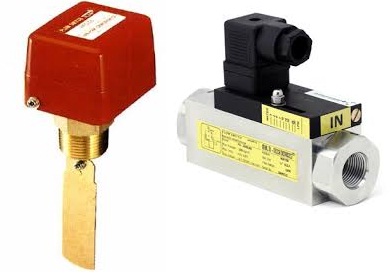
Flow switches flow switch pressure range – 13.5 bar connection – 1” npt brass temp – 150 deg c flapper – ss micro switch spdt 230 v ac 15 amp.

| Business Type | Manufacturer, Exporter, Supplier |
| Number Of Flower | Magnetic Level Transmitter |
| Country of Origin | India |
| Material | Metal |
| Application | For Liquid Measuring |
Level switch switch output potential free relay contact simple, low cost & reliable trouble free operation for conductive non conductive liquids protection class ip-65 level transmitter 2 wire system continuous 4-20ma dc output simple, low cost & reliable trouble free operation for conductive non conductive liquids protection class ip-65.
| Business Type | Manufacturer, Exporter, Supplier |
| Material | Mild Steel |
| Driven Type | Battery |
| Application | Industrial Use, Pressure Measurement |
| Certification | CE Certified |
| Number Of Flower | Pressure Transmitter |
| Country of Origin | India |
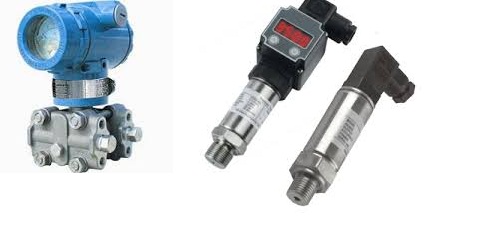
Pressure transmitters are workhorse devices in industrial process control. They convert pressure readings into a standard electrical signal, typically a 4-20mA current loop,
that can be easily transmitted over long distances without signal degradation. This allows for remote monitoring and control of pressure in various applications. Expand more
Here's a breakdown of typical pressure transmitter specifications:
General Specifications
· Pressure Range: The range of pressure the transmitter can measure.. Ranges can vary widely, from fractions of a psi to thousands of psi (or bar).exclamation
· Accuracy: Expressed as a percentage of full scale (%FS).. Typical accuracy for good quality transmitters is ±0.1%FS..
· Output Signal: The most common output signal is a 4-20mA current loop.. Other options include 0-5V or 0-10V voltage output.
· Supply Voltage: The voltage required to power the transmitter. This is typically 24VDC.
Performance Specifications
· Temperature Limits: The operating temperature range of the transmitter.. This will depend on the materials used in its construction.
· Proof Pressure: The maximum pressure the transmitter can withstand without permanent damage.. This is typically 1.5 to 2 times the upper limit of the pressure range.
· Burst Pressure: The pressure that will cause the transmitter to fail catastrophically. This is typically 4 times the upper limit of the pressure range.exclamation
· Response Time: The time it takes for the transmitter output to respond to a change in pressure.. This is typically in milliseconds (ms).
Environmental Specifications
· Ingress Protection (IP rating): A rating that specifies the level of protection against dust and water ingress.. For example, an IP67 rated transmitter is dust tight and can withstand immersion in water up to 1 meter deep.
· Material of Construction: The materials used in the wetted parts of the transmitter (the parts that come into contact with the process fluid). Common materials include stainless steel, Hastelloy C, and Monel.
Additional Features
· Communication Protocol: Some transmitters include a communication protocol, such as HART, that allows for remote configuration and diagnostics.
· Display: Some transmitters have a built-in display that shows the pressure reading.
· Calibration: Transmitters need to be calibrated periodically to ensure accuracy.. Some transmitters have features that make calibration easier, such as zero and span adjustments.
Here are some additional factors to consider when selecting a pressure transmitter:
· Process Connection: The type of fitting used to connect the transmitter to the process. Common process connections include NPT, flange, and sanitary tri-clamp.
· Electrical Connections: The type of electrical connector used to connect the transmitter to the power supply and output signal.
By considering these specifications and factors, you can select a pressure transmitter that is suitable for your specific application.

| Business Type | Manufacturer, Exporter, Supplier |
| Meter Technology | Differential |
| Material | Metal |
| Application | Vibrating Levelling |
| Number Of Flower | Vibrating Fork Level Limit Switch |
| Frequency | 60Hz |
| Country of Origin | India |
vibrating point level switch for high, low or demand levels of dry bulk solids in bins, silos or hoppers. This compact switch can be top, side or angle mounted. The vibrating fork design ensures the tines are kept clean, and the unique fork and crystal assembly design eliminates false high level readings even if tines become damaged. Used for liquidsolid interface detects settled solids within liquids or solids in confined spaces like feed pipes. It is designed to ignore liquids in order to detect the interface between a solid and a liquid. This has an optional 4-20 mA output for monitoring buildup on the fork in sticky applications, to determine the need for preventative maintenance. Key Specifications High resistance to mechanical forces, and strong vibration resistance to high bulk material loads Suitable for low density material: standard version, liquidsolid interface version, and low density option Low frequency, low energy operation High or low level alarm in solids with simple failsafe highlow selection

